How to Sell AI Builds to Electricians (The Stale-Estimate Pitch)
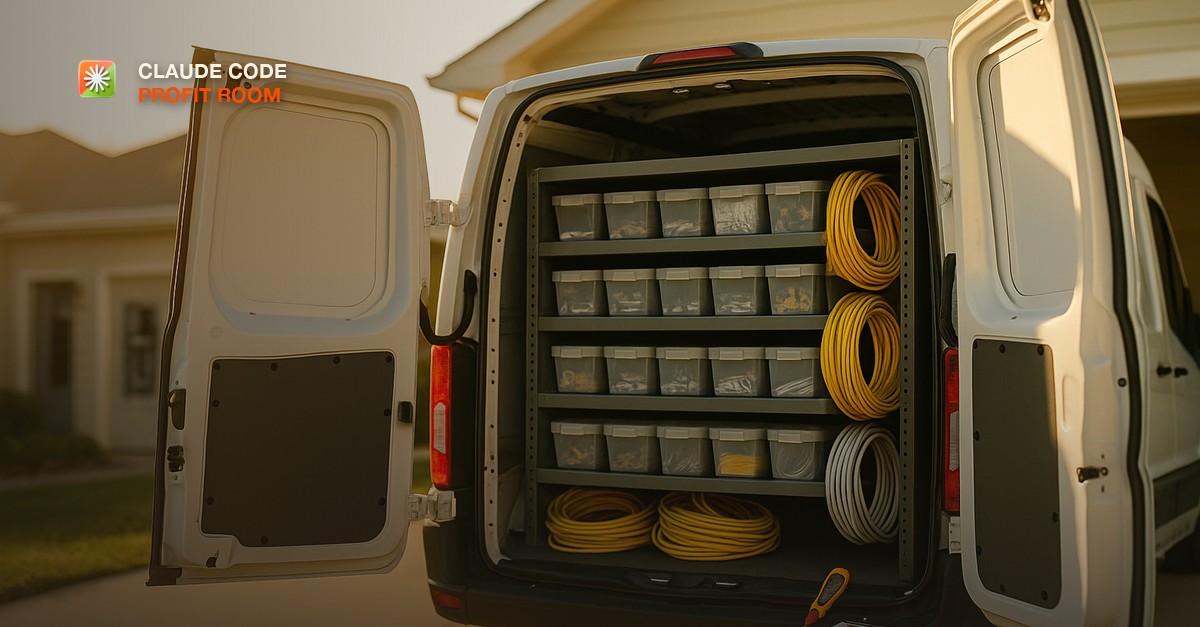
- Electricians lose project work after the estimate, not before it. A homeowner asks for a quote on a panel upgrade or an EV charger, the owner drives out, writes a number from the truck, sends it, and moves on to the next call. The homeowner is collecting quotes, and the contractor who follows up first, answers the questions, and books the date wins. The estimate that nobody chases goes stale.
- The strongest first builds: an estimate follow-up assistant that works every open quote until it is booked or dead and answers the questions that stall it; a project intake assistant that collects what an electrician needs to quote from photos, including the panel, so fewer quotes need a truck roll before there is a number; and a permit-and-inspection update flow that keeps the homeowner informed so the phone stops ringing about scheduling.
- Use the Profit Room's Stale-Estimate Pitch: ask the owner how many estimates they sent last month that they never heard back on. Price the first build against one project job they would otherwise have lost, not against your hours, and attach a monthly plan because the follow-up sequence, the intake questions, and the seasonal work all change.
The Short Answer
Sell to an electrician by selling the estimate. An electrical contractor's day is a mix of two kinds of work. Service calls are fast: a breaker keeps tripping, an outlet is dead, a business lost power on one circuit, and whoever answers the phone and can come today gets it. Project work is slower and bigger: a panel upgrade, an EV charger circuit, a standby generator hookup, a kitchen remodel, a new build. Project work needs a site visit and a written estimate, and once the estimate is sent it enters a silence the owner has no time to break. That silence is where the year's best jobs go to die.
That is the Stale-Estimate Pitch: one question - how many estimates did you send last month that you never heard back on? - followed by a demo of an assistant that follows up on every open quote, answers the homeowner's questions about timing, permits, and what is included, and books the job or the second visit. Do not open with AI. Open with the stack of quotes the owner remembers writing and never counted. The entry point is different from [selling to HVAC companies](/blog/sell-ai-builds-to-hvac-companies) or [plumbers](/blog/sell-ai-builds-to-plumbing-companies), where the leak is the missed call. Electricians have that leak too, but their bigger one comes after the visit, and nobody else is pitching it.
What an Electrical Contractor Actually Pays For
An electrical business, whether it is a one-van residential outfit or a shop running several crews on commercial jobs, bleeds at four points: the estimate that goes out and is never chased, the quote request that needs a truck roll just to get a number, the project that stalls in permit and inspection scheduling while the homeowner keeps calling for updates, and the finished job that never turns into a review or a referral. Every first build worth pitching sits on one of those.
- Estimate follow-up: an assistant that takes every estimate the moment it is sent and works it until it is booked or dead. It checks in on a schedule, answers the questions that stall a decision, such as whether the price includes the permit, how long the power will be off, and when the crew could start, and books the job or a second visit into the owner's calendar. This is the build that pays for itself first, because the jobs are already quoted; the work is only to stop losing them.
- Project intake from photos: an assistant that answers the website form, text, or missed call and asks what an electrician needs to quote: the job, a photo of the panel with the cover on and the label visible, the distance from the panel to where the work goes, the age of the house, and whether the homeowner wants one thing or several. For common jobs the owner can quote from the photos and only roll a truck for the ones that need eyes on site. Fewer wasted visits, faster numbers, more quotes out the door.
- Permit and inspection updates: for project work that involves a permit and an inspection, a flow that tells the homeowner what happens next, confirms the inspection window, and handles the reschedule when the inspector's date moves. The owner stops fielding 'any update?' calls, and the homeowner stops feeling ignored during the slowest part of the job.
- Post-job review and referral: after the inspection passes, a short check-in that catches a problem privately, asks for the review, and reminds the homeowner that the same crew does EV chargers, generators, and lighting when the neighbor asks. A panel upgrade is invisible from the street; the assistant makes sure the referral still happens.
All of it is front-office. Nothing touches the wiring, the code compliance, or the licensing, and every line maps to a booked job, a quote that did not need a truck roll, or an hour the owner got back. Most established contractors already run some estimating, scheduling, or invoicing software, so your build wraps around it: catch what it drops, write into the calendar they already use, and replace nothing. If you want the scoping questions in a repeatable form, [an AI intake form](/blog/how-to-build-an-ai-intake-form-for-clients) is the first thing you build for them, and it doubles as the project intake.
How to Pitch the Owner
Go to the owner, and go when they can talk: early morning before the vans roll or late afternoon after the last call. Electricians read texts from the truck and read email never, so a short text that earns a ten-minute call beats anything else. Do not pitch during a heat wave or a storm week, when service calls swallow the schedule; do pitch in the weeks after, when the owner has just lived through a month of quotes going out and nothing coming back.
Get to the sting fast. 'How many estimates did you send last month that you never heard back on?' Most owners will not know the number and will know it was too many. That pause is your opening. Then demo, do not describe. Text your demo line as if you were a homeowner asking about an EV charger and let the owner watch it ask for the panel photo, the distance to the garage, and the make of the car. Then send it a 'still thinking about the quote, does that include the permit?' message and watch it answer and offer a start date. This is the [demo-first close](/blog/the-demo-first-close) in its purest form: the owner needs to see that it asks what they would ask and sounds like their shop.
[Qualify before you build](/blog/qualify-a-lead-before-the-call). A residential service outfit, a contractor who lives on remodels and new construction, and a commercial shop on maintenance contracts are three different businesses. Ask how work comes in, what share is service versus project, how they write and send estimates today, what they schedule and invoice with, and who answers the phone while everyone is on a job. The service-versus-project answer tells you whether the first build is estimate follow-up or missed-call intake. The estimating answer tells you where the follow-up assistant plugs in.
How to Price the Build
Price against a project job, not against your hours - the frame [value-based pricing](/blog/value-based-pricing-stop-charging-hourly) exists for. The owner knows what a panel upgrade or a generator install bills and knows their margin on it. Do the math out loud with their numbers: if the follow-up assistant rescues even a small number of the estimates that would have gone stale, the build has paid for itself before you mention intake or inspections. Against that, a scoped first build priced in the low thousands is cheaper than one lost project. Scope it to the single worst leak, which for most electricians is the unchased estimate, and ship it before their next round of quotes goes out.
Then attach the monthly plan, because the offer moves with the season and the trade. Summer brings storm damage and overloaded circuits, fall brings generator and lighting work, and every year the mix of EV chargers, panel upgrades, and remodels shifts with what homeowners are asking for. The follow-up cadence, the intake questions, and the update scripts all need a hand each quarter, and the owner has no interest in touching software from a crawlspace. Structure it the way [packaging a maintenance plan for AI builds](/blog/package-a-maintenance-plan-for-ai-builds) lays out, and lead with what the owner sees each month: estimates that turn into jobs, quotes that go out without a truck roll, and a phone that is quieter during inspection week. If they hesitate on the build, a small paid look at last quarter's estimates and what happened to each is a clean [audit offer](/blog/the-audit-offer-foot-in-the-door) that names the leak with their own numbers before you propose the fix.
Short, practical drops on offers, outreach, pricing, and closing clients with Claude Code. No spam, unsubscribe anytime.
Frequently asked
What is the best first AI build to sell an electrician?
An estimate follow-up assistant. Electricians write project estimates for panel upgrades, EV charger circuits, generator hookups, and remodels, send them from the truck, and rarely follow up, while the homeowner collects other quotes. An assistant that works every open estimate on a schedule, answers the questions that stall a decision, such as whether the permit is included and when the crew could start, and books the job into the owner's calendar recovers work that was already quoted. A photo-based project intake assistant is the natural second build, and a permit and inspection update flow the third.
Why pitch electricians on estimates instead of missed calls?
Because the missed call is the smaller leak for most electrical contractors and the more crowded pitch. Service calls are fast and whoever answers gets them, but the profitable work is project work, and project work is won or lost after the site visit, in the silence between sending an estimate and the homeowner deciding. Missed-call intake still belongs in the build, especially for a service-heavy outfit, but the estimate follow-up is the leak nobody else is pitching and the one the owner feels the moment you ask about it.
Do electricians have budget for AI builds?
For a scoped build, yes, when it is anchored to their own numbers. A panel upgrade, a generator install, or a remodel wiring job is a large ticket, and the owner knows what they lose each time one goes to another contractor. Walk through what a typical project bills, how many estimates went out last month, and how many were never answered. Priced against that, a first build in the low thousands plus a monthly plan reads as a rational trade rather than a software expense, and most established contractors already pay monthly for estimating or scheduling software.
Should my build replace the electrician's estimating or scheduling software?
No. Established electrical contractors usually rely on estimating, scheduling, and invoicing software to run crews and get paid, and a migration turns a quick yes into a long maybe. The winning first build wraps around the existing stack: it picks up each estimate after it is sent, catches the texts, calls, and form fills the current setup misses, writes bookings and inspection dates into the calendar they already use, and runs the follow-ups and check-ins nobody has time to send. You are selling booked projects on top of their tools.
How do I price an AI build for an electrician?
Do the math with the owner's numbers: what a project job bills, how many estimates go out in a month, and how many the follow-up assistant needs to rescue to cover the build. Price the scoped first build against that, commonly in the low thousands, then attach a monthly plan covering the follow-up cadence, the intake questions, the permit and inspection scripts, and seasonal changes in the work mix. The retainer is where this vertical pays, because the offer changes through the year and the owner has no interest in maintaining software between jobs.
Last reviewed September 27, 2026.

Co-founder of the Claude Code Profit Room. Built and sold AI services to real clients; writes about offers, pricing, outreach, and closing with receipts.
More from Duncan Rogoff →