
Co-founder
David Iya
David Iya co-founded the Claude Code Profit Room to help builders turn what they can already make into real revenue.
David co-founded the Claude Code Profit Room alongside Duncan Rogoff. The idea is simple. A lot of people can now build almost anything with Claude Code, but building is only half of the equation. The other half is getting paid for it, and that is the part most builders were never taught.
What David focuses on
David's work centers on the income side of building: offers, distribution, and the systems that let a small team punch far above its size. He is evidence led and practical, and he cares more about what actually moves revenue than about what sounds impressive.
- •Turning a build skill into an offer people will pay for
- •Distribution and traffic, which he treats as the number one priority
- •Automation that runs without babysitting, so leverage compounds
Inside the Room, that shows up as straight guidance on what to build, who to sell it to, and how to close, without the noise.
Articles by David Iya

Systems & Scale
How to Write a CLAUDE.md for a Client Project (The Five-Block Template)
A CLAUDE.md is the standing brief Claude Code reads every time you open a client project. Here is the five-block template I use on paid work, what to leave out, how to keep it current, and why it quietly protects your scope and your handoff.

Systems & Scale
How to White-Label Your AI Builds (Deliver Under Your Own Brand)
White-labeling your AI builds means the client only ever sees your brand, never the tools underneath. Done right it lets you charge for an outcome instead of a stack of software. Here is the White-Label Stack I use to deliver Claude Code work that looks entirely your own.

Systems & Scale
How to Build a Client Portal for Your AI Service (and Look Twice Your Size)
A client portal is the single place your clients go to see progress, hand off inputs, and get deliverables - instead of hunting through email threads. Build a simple one with Claude Code and a small service starts to feel like a real company.

Systems & Scale
How to Stop Scope Creep on a Claude Code Project
How to stop scope creep on a Claude Code project without being the bad guy. The Change-Order Line: define done in writing, then route every new ask through a simple yes-and-here-is-the-price response that protects your time and your margin.

Offers & Pricing
How to Write a Sales Page for Your Productized Claude Code Build
How to write a sales page that sells a productized Claude Code build - the five sections that turn a vague service into a clear, buyable offer, in the order that actually converts.

Systems & Scale
How to Onboard a Claude Code Client the Right Way
How to onboard a Claude Code client so the project runs smoothly - the kickoff packet, access checklist, and communication cadence that prevent the delays and scope drift that sink first projects.

Offers & Pricing
How to Prove the ROI of Your Build So Clients Keep Paying
How to prove the ROI of your build to a client - the simple before-and-after record that turns a one-off project into a renewed retainer and makes your next price an easy yes.

Offers & Pricing
How to Estimate a Claude Code Build So You Don't Lose Money
A simple way to estimate a Claude Code project before you quote it - so you price for the real work, not the demo you built in an hour. Includes a step-by-step method and the buffers that keep you profitable.

Getting Clients
7 Claude Code Builds You Can Sell This Week
Seven small, fixed-scope Claude Code builds real businesses pay for - what each one is, who buys it, and how to price it. Pick one and pitch it this week.

Offers & Pricing
Productize Your Claude Code Skill Into a Repeatable Offer
Productize your Claude Code skill and stop selling custom one-offs. Here is how to turn a single build into a fixed-scope offer clients can say yes to fast.

Outreach
Build in Public: How Shipping Openly Brings Clients to You
Build in public to attract clients by posting your Claude Code builds as you ship them. Proof beats pitching - here is how to turn visibility into inbound leads.

Closing
The Demo-First Close: Win Deals by Building the Prototype First
The demo-first close is a builder's unfair advantage. Show a working Claude Code prototype before the contract and convert more deals than any pitch ever could.

Offers & Pricing
Turn a Personal Tool You Built Into a Paid Product
Turn a personal tool into a paid product by recognizing that your internal Claude Code build is already someone else's solution. Here is the path from using it to selling it.

Outreach
The Builder's Lead Magnet: Use a Free Tool to Get Client Leads
Builder lead magnet strategy: ship a small free tool that solves one real problem and captures warm leads better than any PDF ever will.

Systems & Scale
Systematize Your Delivery So You Can Take On More Clients
Systematize your delivery pipeline by turning every client build into a repeatable sequence so your throughput scales beyond what memory and hustle can hold.

Systems & Scale
Build Your Own Client CRM With Claude Code
Build your own client CRM with Claude Code to own your pipeline, avoid subscription fees, and customize every field to match how you actually work.

Mindset
Why Builders Undercharge (And How to Stop)
Why builders undercharge is rooted in a psychological trap: when the work feels easy to you, you price it like it is easy for everyone. Here is how to correct that.

Mindset
The Impostor Gap: Selling When You Feel Unready
Impostor gap selling is the act of closing clients before you feel fully ready. Learn why competence always leads confidence for Claude Code builders.

Systems & Scale
Balancing Building and Selling Without Dropping Either
Balancing building and selling is the core tension for Claude Code operators. This time system keeps your pipeline full while you deliver active client work.

Outreach
Turn Your Builds Into Content That Attracts Buyers
Turn builds into content by documenting every Claude Code project as shareable material. Learn the Build-to-Content system that pulls in warm buyer leads.

Systems & Scale
From Freelancer to Agency: When and How to Make the Jump
Going from freelancer to agency with Claude Code requires specific signals and systems. Learn the exact triggers and first hires that make the transition work.

Mindset
Your First $10k Month as a Builder-Operator: The Math
First 10k month builder math broken down: offers, price points, and close rates. See how few deals it actually takes to hit the number.

Mindset
The Builder's Moat: Why Non-Builders Cannot Copy You
The builder's moat is the durable competitive edge that separates operators who can ship from those who can only sell. Learn why it compounds over time.

Systems & Scale
Recurring Revenue: Retainer vs Productized Subscription
Retainer vs productized subscription - two recurring revenue models for builders. Learn which one fits your current stage and how to switch when you are ready.

Systems & Scale
Subcontract Other Builders to Scale Past Your Own Hours
Subcontract builders to scale your revenue without trading more of your own hours. Learn the workflow, handoff structure, and vetting process that makes delegation work.

Getting Clients
You Can Build Anything. Here's Why You Still Can't Sell It.
The gap between shipping software and landing paying clients is not a skill you were born without. It is a system nobody taught you. Here is the map.

Systems & Scale
Why Every Builder Should Install Their Own Jarvis
The move from consumer to owner. How building a personal dashboard that runs your outreach and pipeline turns busywork into a compounding asset.

Systems & Scale
How to Deliver a Build So Clients Come Back
How to deliver a Claude Code build so clients come back - the handoff routine that turns a finished project into a client who rehires you and refers the next three.

Systems & Scale
The Weekly Client Update That Prevents Fires
How a weekly client update prevents the fires that sink projects - the three-line format that keeps clients calm, surfaces blockers early, and makes you look in control.

Systems & Scale
The Weekend MVP: How I Ship a Client Build in Two Days
How I use Claude Code to ship a client MVP in a single weekend - the two-day shape, the one feature to build first, and the scoping mistake that turns a weekend into a month.

Closing
What to Do When a Client Goes Silent
A client went silent after the proposal or mid-build and you are not sure what to do. Why clients go quiet, the follow-up that reopens the door without sounding desperate, and when to walk away for good.

Offers & Pricing
How to Productize Your Claude Code Service Into a Fixed Offer
A productized service turns your best repeating Claude Code build into a fixed scope, fixed price, fixed deliverable - so you stop scoping from scratch and start selling the same thing twice.

Client Acquisition
How to Get Inbound AI Clients (Without Cold Outreach)
Inbound AI clients come when potential buyers can see your work before they hire you. Three things drive consistent inbound: a public build log, a specific niche claim, and a free resource that solves a real problem for your target client.

Getting Clients
How to Get Your First Client Testimonial as a Claude Code Builder
Your first testimonial is the hardest to get because you have not built the reflex of asking for it yet. The Proof Request is a three-step pattern that makes the ask feel natural, gets you a specific quote you can actually use, and turns a satisfied client into the most powerful thing your next prospect can read.

Client Acquisition
How to Get AI Clients on Upwork in 2026 (The Outcome Pitch Method)
Get AI clients on Upwork by positioning yourself as a results-delivery partner, not a cheap hourly worker. The builders winning mid-market Upwork contracts in 2026 lead with speed and outcomes - not the tools they used. Here is the Outcome Pitch framework that closes.

Getting Clients
How to Find Your First AI Build Client (Without Cold Outreach)
How to find your first Claude Code client without cold DMs or LinkedIn posts - where first clients actually come from, the audit offer that closes itself, and how to describe what you do to a non-technical buyer.

Client Management
How to Handle Client Revision Requests Without Scope Creep Eating Your Profit
Every builder gets them. 'Can you just change this one thing?' Here is how to handle client revision requests without scope creep turning a profitable project into an unpaid internship - including the exact reply I use to separate included revisions from new work.

Systems & Scale
Track Which Client Projects Are Actually Profitable
Most builders track revenue but not profit per project. A project that billed $3,000 but took 40 hours of your time is worse than one that billed $1,500 in 8 hours. Here is the tracking system I built to find out which projects are worth repeating.

Agency
How to Turn Happy Claude Code Clients Into a Referral Pipeline
Getting referrals from Claude Code clients is not about asking at the right time - it is about building the conditions that make a client want to send you someone. Here is the referral system I actually use.

Delivery
How to Take Over a Client's Existing Codebase with Claude Code
Taking over a client's existing codebase with Claude Code means reading before you write - the first deliverable is a map of the system, not a new feature. Here is the Read-Map-Patch method I use so I do not break production on week one.

Delivery
Build a Client Reporting Dashboard With Claude Code (No Reporting Tool Required)
Skip the $50-a-month reporting SaaS. Here is how to build a simple client reporting dashboard with Claude Code that pulls real numbers and takes an afternoon, not a subscription.

Delivery
What to Do When You Hit a Claude Code Rate Limit Mid-Client-Build
Hitting a Claude Code rate limit during a client build is not a crisis if you plan for it. Here is what the limit actually is, what to do in the moment, and how to build in the buffer so it never costs you the client's confidence.

Client Management
Who Owns the Code You Build for a Client
Who owns the code you build for a client depends on what your contract says, not on who paid the invoice. Here is the ownership line every Claude Code builder should put in writing.

Sales & Closing
How to Run a Paid Pilot Before a Full Engagement
A paid pilot is a small, priced, time-boxed piece of the real work you get paid for before either side commits to the full build. It closes hesitant leads a deposit alone cannot, and it tells you honestly whether a client is worth scaling with. Here is the Pilot Frame I use to structure one.

Client Management
How to Handle a Client Who Pays Late
How to handle a client who pays late without torching the relationship: the message to send on day one, when to pause work, and the terms that stop it happening again.

Client Management
Is It Safe to Use Claude Code With Client Data? A Straight Answer for AI Agencies
Yes, if you draw the line correctly. It is safe to use Claude Code with client data when you scope what it can access and keep sensitive material out of anything shared or public. Here is the Two-Bucket Rule I use to make that call on every project.

Delivery
When a Claude Code Build Runs Over Budget: What to Tell the Client
Tell them the same day, in writing, with the cause, the options, and a number. Here is the Overrun Message I send, plus the Scope Ledger habit that stops most overruns before they happen.

Client Management
When a Client Asks for a Refund (The Exact Reply to Send)
A refund request is almost never really about the money. Here is how to read what the client is actually asking for, the four-part reply that resolves it without torching the relationship, and the terms that stop it happening again.

Sales & Closing
We Already Tried AI and It Did Not Work: How to Handle the Objection
This objection is not a brush-off, it is a scar. The client already spent money on something that broke, and every promise you make sounds like the one that already failed. Here is how to handle it without arguing, and why it is the best lead you will get all month.

Client Acquisition
How to Get AI Clients in Facebook Groups Without Getting Banned
Facebook groups are full of business owners who need AI work and full of admins who delete anyone selling it. Here is the approach that gets you clients without getting your posts removed.

Delivery
A Client Found a Bug After Launch: What to Say and What to Charge
The message arrives a week after handover and it always feels like an accusation. Here is how to answer a post-launch bug so you keep the relationship, stay out of unpaid work forever, and turn the moment into a support arrangement.

Offers & Pricing
A Client Wants to Pay in Equity: When to Say Yes, and How to Structure It
Equity instead of cash is usually a discount disguised as a partnership. Here is how to tell the rare good offer from the common bad one, and what to insist on before you agree to either.

Getting Clients
How to Sell AI Builds to Real Estate Agents (A Vertical That Actually Pays)
Real estate agents are one of the easiest verticals for a solo AI builder: they are self-employed, commission-driven, and they lose deals to slow follow-up. Here is what to build, what to charge, and how to get the first three.

Getting Clients
How to Get AI Clients on Instagram (Without Becoming an Influencer)
Instagram is a terrible place to broadcast about AI and a very good place to have conversations with business owners who already follow you. Here is the demo-first system that turns a small account into client calls, and why follower count is the wrong thing to chase.

Offers & Pricing
What to Do When a Competitor Undercuts Your Price (Never Match It)
A cheaper quote turned up and the prospect wants you to explain yourself. Here is why matching the number is the wrong move, the three questions to ask before you respond, what to say on the call, and when losing the deal is the profitable outcome.

Delivery
How to Get a Client to Sign Off on a Build (The Acceptance Gate)
To get a client to sign off on a build, hand them a test script and a dated window, not a link and a hopeful message. Here is the Acceptance Gate: the five-part routine that turns a vague 'looks great' into written acceptance, and what to do when a non-technical client will not test at all.

Systems & Scale
How to Run Multiple Claude Code Client Projects at Once Without Losing Track
To run multiple Claude Code client projects at once without losing track, give every client their own folder, their own git worktree, and their own CLAUDE.md, and never open two clients' work in the same terminal session. Here is the isolation rule that prevents wrong-repo pushes and leaked context, the switch checklist, and how many clients that actually buys a solo builder.

Systems & Scale
Claude Code Subagents for Client Work: How I Run Two Builds in Parallel
Claude Code subagents for client work let a solo builder split one engagement into parallel specialist tasks instead of one long serial session, which is real wall-clock time back on well-scoped builds. Here is the exact subagent setup I run per client, when it actually helps versus when it just adds coordination overhead, and the file-ownership rule that keeps parallel agents from stepping on each other's work.

Systems & Scale
Claude Code Hooks for Client Work: The Pre-Delivery Checklist That Runs Itself
Claude Code hooks for client work are shell commands that fire automatically before or after Claude touches a file, so QA and safety checks run on every session instead of whenever you remember. Here is the two-hook setup I run on every paid repo, what to block, what to auto-run before calling a session done, and the mistakes that turn a safety net into a liability.

Systems & Scale
Claude Code Skills for Client Work: When to Build One and What Goes Inside It
A Claude Code skill is a saved SKILL.md package that does one specific client task the same correct way every time, instead of you re-explaining it in every session. Here is the rule for when a task earns a skill, what to put inside one, and how skills differ from the subagents and hooks you already run.

Systems & Scale
Claude Code Auto Mode for Client Work: What It Actually Approves Without Asking You
Auto Mode hands the yes/no decision on most actions to a separate classifier model instead of prompting you every time. On a client codebase, that is only safe once you understand the fixed decision order it follows, because two things override that classifier entirely, and neither of them is a boundary you can just say out loud in the chat.

Systems & Scale
Claude Code Plan Mode for Client Work: Scope the Build Before You Touch a Line of Code
Plan Mode is a permission boundary, not a suggestion box: it blocks every write tool and forces Claude Code to read the repo and hand you a numbered plan before anything changes. Here is how to run a Plan Mode pass on a new client codebase, what it is honest about not knowing, and how the plan it hands back becomes the first draft of your quote.
Systems & Scale
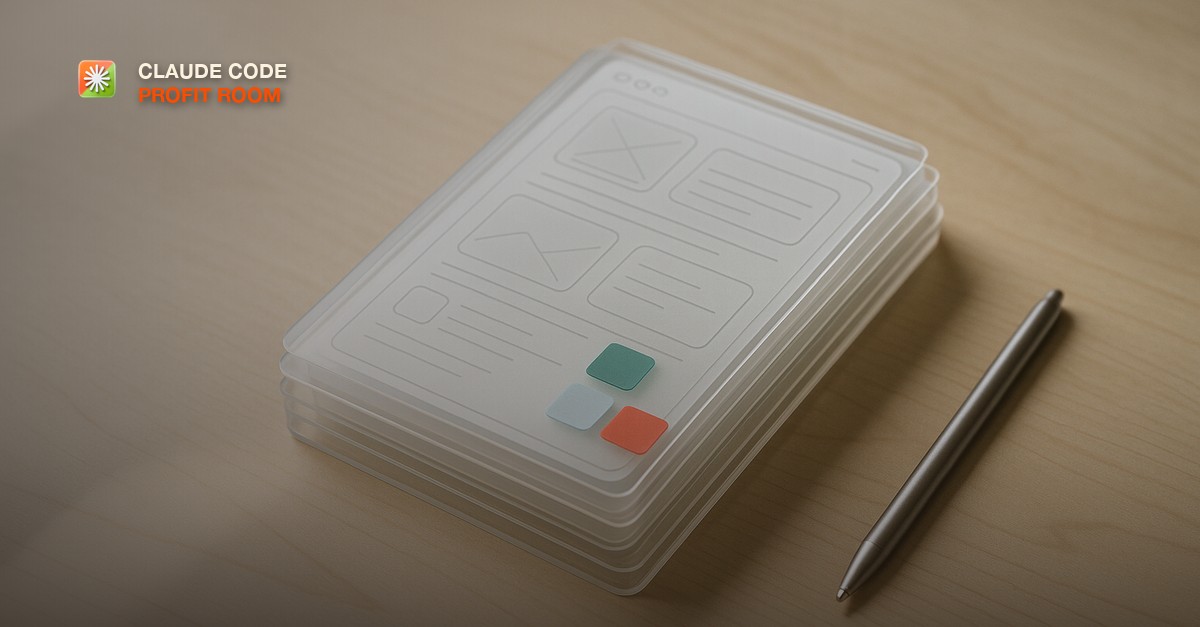
Claude Code's /design Command for Client Work: Turn an Idea Into a Mockup Before You Quote
The /design command, in research preview since August 17, 2026, takes an idea, a screenshot, or an existing design and hands back editable UI artboards inside Claude Code, in the CLI and the desktop app. Here is what the pick-tweak-implement workflow actually does, how to run it on a discovery call, and where it stops being enough on its own.

Systems & Scale
Claude Code Checkpoints for Client Work: Undo a Bad Edit Before the Client Ever Sees It
Claude Code checkpoints save a restore point at every prompt and snapshot files before every edit, so a botched change on a client's repo is one Esc-Esc away from gone. Here is what checkpoints actually track, what they miss, and how to build a checkpoint habit into paid client sessions.

Systems & Scale
Claude Code Custom Slash Commands for Client Work: Build Once, Trigger On Demand
A custom slash command is a saved markdown prompt you trigger yourself by typing /command-name, instead of retyping the same instructions on every client project. Here is how to build one, where to save it so it ships with (or follows) a client repo, and the three commands worth building first.

Systems & Scale
Claude Code Extended Thinking for Client Work: When to Turn It On
Extended thinking has Claude reason through a problem step by step, visible in the transcript, before it lands on an answer. Here is what it actually changes, how to toggle it mid-session, and the client-work tasks worth the extra time versus the ones that do not need it.

Systems & Scale
Claude Code Background Tasks for Client Work: Keep Building While a Long Command Runs
Claude Code can push a long-running command, a dev server, a full test suite, a migration, into the background so it keeps taking your next prompt instead of sitting idle until the command finishes. Here is how backgrounding works, what it does not do, and how to use it without telling a client something is done before you actually checked.

Systems & Scale
What to Do When Claude Code Writes Wrong Code on a Client Build
Claude Code will occasionally write code that looks right and is not, on a build a client is paying for. The move is not to panic-fix it or hide it: revert to the last known-good state, reproduce the exact failure, and hand Claude the error instead of a vague complaint. Here is the recovery loop that keeps a wrong answer from becoming a wrong deliverable.

Systems & Scale
Claude Code Context Window for Client Work (When to Clear vs Compact)
The Claude Code context window is the running memory of your session, and on a long client build it quietly fills with old detours until answers get worse. The move is to treat it as a working surface you manage: clear it between unrelated tasks, compact it when a long thread is still relevant, and reload the client's real facts from CLAUDE.md instead of the chat log. Here is how to keep a paid session accurate to the last hour.

Systems & Scale
How to Build an AI Intake Form for Clients (And Why It Should Be Your First Build)
An AI intake form routes new client information, qualifies the lead, and hands you a structured brief before you get on a call. Here is how to build one with Claude Code in the desktop app, what to charge for it, and why it doubles as a sales tool for your own agency.

Delivery
How to Build an AI Chatbot for a Client Website (Without Overselling It)
How to build an AI chatbot for a client website: scope the questions it must answer, ground it in the client's real content, embed it as a widget, and price it as a lead-capture outcome. A practical walkthrough of what actually ships versus what breaks.

Systems & Scale
How Much Can You Make With a Claude Code Agency? (An Honest Answer)
How much can you make with a Claude Code agency depends on one thing more than skill: whether you sell or just build. Here is the honest math, the three income floors most solo builders hit, and the levers that actually move the number.

Systems & Scale
How to Turn a Claude Code Build Into a SaaS Product
Turning a Claude Code build into a SaaS product means shifting from a one-time fee to recurring revenue without hiring a team. Here is exactly how agency operators and solo builders package a working build into a product that sells while they sleep.

Business Strategy
How to Build and Sell a SaaS with Claude Code (The Builder's Product Playbook)
Claude Code lets you ship a working SaaS in days, not months. Here is the exact process for picking a niche, building an MVP, pricing it right, and landing your first paying subscribers - without a team or a runway.

Tools and Workflow
How to Use Claude Code Subagent Workflows to Deliver Client Work Faster
Claude Code subagent workflows let you run parallel tasks inside a single project - splitting research, writing, and build steps so your delivery time drops without adding headcount. Here is how agency operators set them up for real client work.

Getting Clients
How to Sell AI Builds to Coaches and Consultants
Coaches and consultants are some of the highest-value Claude Code clients you can land. They have specific, repeatable workflows, healthy margins, and a solo operator's need to scale without hiring. Here is the offer, the pain, and the pitch.

Delivery
Claude Code Plugins for Client Work
Claude Code plugins bundle your slash commands, subagents, hooks, and MCP servers into one installable package. For client work that means you set up a repeatable delivery system once and reuse it on every project. Here is how to build, install, and sell with plugins.

Systems & Scale
How to Build an AI Voice Agent for a Client
To build an AI voice agent for a client, wire a phone number to a speech pipeline, define one narrow job it handles end to end, and let Claude Code assemble the glue code. This is the exact build, scope, and pitch.

Systems & Scale
How to Use an AGENTS.md File for Client Work with Claude Code
An AGENTS.md is a plain markdown brief that AI coding agents read automatically at the start of a session. For client work, use it to write portable rules once and have them survive across tools and teammates. Here is what goes in it, how it differs from CLAUDE.md, and why it protects a paid build.

Systems & Scale
Claude Code Git Worktrees for Client Work: Run Two Builds at Once Without Breaking Main
Claude Code git worktrees for client work let you run two sessions on the same client repo at the same time - one on the feature, one on the hotfix - without either session stepping on the other. A worktree is a second working folder attached to the same repository, each on its own branch. Here is when to use one, how to set it up, and the guardrails that keep a paid build safe.

Systems & Scale
Claude Code Security Review for Client Work: The Pre-Handoff Pass That Protects Your Reputation
A Claude Code security review for client work is a dedicated pass where a fresh session hunts for exposed secrets, missing auth, and injection risks before the build reaches the client. Claude Code ships a built-in security review command, and running it as a named step in your delivery does two things: it catches the mistakes that end relationships, and it becomes a line item clients are glad to pay for. Here is how to run it and how to sell it.

Systems & Scale
Claude Code Permissions for Client Work: Grant Access by Blast Radius, Not Convenience
Claude Code permissions for client work come down to one rule: grant each capability by how much damage a wrong action could do, not by how convenient a blanket approval feels. The desktop app asks before it edits files, runs commands, or touches the network, and you can pre-approve safe actions while keeping dangerous ones behind a prompt. On a client project, that permission setup is not a nuisance to click through - it is the difference between a fast session and an incident you have to explain. Here is how to set it up per project and how to talk about it with clients.

Systems & Scale
Claude Code Routines for Client Work: Sell the Nightly Run, Not the Hour
Claude Code routines for client work let you package a prompt, a client repository, and a set of connectors into a job that runs in the cloud on a schedule, on an API call, or on a GitHub event, while your laptop is closed. That turns the recurring parts of a maintenance plan - the nightly health check, the weekly client report, the review on every pull request - into work you set up once and get paid for every month. Here is what routines actually do, the three worth selling first, how to scope them safely on a client repo, and how to talk about them without overpromising.

Systems & Scale
Claude Code GitHub Actions for Client Work: Leave @claude in the Repo When You Leave
Claude Code GitHub Actions for client work means installing the Claude Code GitHub Action on the client's repository, under the client's own API key, so @claude answers in their issues and pull requests after you hand off. It is the cleanest leave-behind I know: the client keeps a reviewer and a fixer that knows their codebase, you keep a reason to be on retainer, and nothing depends on your laptop or your account. Here is what the action actually does, why it has to run on the client's key and not yours, how I install and scope it on a paid project, and how to talk about the cost.

Systems & Scale
Claude Code Sandboxing for Client Work: Fence Each Build So One Client Can Never Read Another
Claude Code sandboxing for client work means turning on the built-in Bash sandbox in each client project, so every shell command Claude runs is fenced by the operating system to that project's folder and to a short list of network domains, and Claude stops asking you to approve routine commands. On a laptop that holds several clients, that is the difference between a policy and a wall. Here is what the sandbox actually enforces, what it leaves open, how I set it up per client in the desktop app, and how to explain it to a client who asks where their code goes.

Systems & Scale
Claude Code Browser Testing for Client Work: Let Claude Verify the Build Before the Client Does
Claude Code browser testing for client work means letting Claude open the client's app in a real browser, click through it, read the console, and fix what it finds before you ever send a link. The desktop app ships two browsers for this: a clean-profile Browser pane that auto-verifies every edit, and the Claude in Chrome extension that acts inside your logged-in accounts. They are not interchangeable on a laptop that holds several clients. Here is what each one does, the Two-Browser Rule I use to keep them apart, and how the same browser pass becomes the proof you hand a client at sign-off.

Systems & Scale
Claude Code Artifacts for Client Work: Send the Client a Link, Not a Wall of Text
Claude Code artifacts for client work turn what Claude builds in your session into a live web page on claude.ai that you can share with a link. For client work that changes how you send status updates, option comparisons, and handoff walkthroughs. It also changes what can leak, because a client sits outside your organization and the only way to share with them is a public link. Here is what an artifact is, who can see it, the Pinned-or-Live Rule I use to decide how each page is shared, and what never goes on one.

Systems & Scale
Claude Code Goal Command for Client Work: Turn the Acceptance Criteria Into the Finish Line
The Claude Code goal command for client work lets you type a completion condition with /goal and have Claude keep working, turn after turn, until a separate model confirms the condition is met. On a client build that means the acceptance criteria the client agreed to can become the condition Claude works toward. Here is how /goal works, how I write the condition, the Sign-Off Condition rule I use, what the evaluator cannot see, and when a goal is the wrong tool.

Systems & Scale
Claude Code Side Chat for Client Work: Ask the Question Without Derailing the Build
A Claude Code side chat lets you ask a question that uses your session's context without adding anything back to the main conversation. Open one with Cmd+; on macOS or Ctrl+; on Windows, or type /btw. On a client build that means you can check an assumption, understand a file, or draft a client reply while the main session keeps its plan intact. Here is how side chats work in the desktop app, the Parking-Lot Rule I use to decide what goes in one, and where they fall short.

Systems & Scale
Claude Code Sessions for Client Work: Name, Sort, and Close Out Every Client Conversation
Claude Code sessions are saved conversations tied to a project folder, and in the desktop app the sidebar lists every one of them. On client work, the way you name, group, and archive those sessions decides whether you can pick up a build in ten seconds or spend the morning reconstructing it. Here is how sessions work in the desktop app, the One-Client-One-Folder rule I use, and the cross-session behavior every builder with more than one client needs to understand.

Systems & Scale
Claude Code Remote Control for Client Work: Steer a Client Build From Your Phone
Claude Code Remote Control lets you drive a session that is running on your own computer from the Claude app on your phone or from any browser. For client work, that means a long build can keep moving while you are on a sales call or away from the desk, and you can answer its questions without walking back to the laptop. Here is how to turn it on from the desktop app, how it differs from cloud sessions and Dispatch, and the client-data rules to set before you use it.
Getting Clients
How to Sell AI Builds to Recruiting Agencies (The Shortlist-Speed Pitch)
Sell AI builds to recruiting agencies by pitching speed to shortlist, not more applicants. A recruiter's day disappears into reading applications, chasing screening calls, and writing up candidates for the hiring manager, and the agency that puts strong candidates in front of the client first often gets the placement. Here is what recruiting agencies actually pay for, the lines an AI build must never cross in hiring, how to pitch the owner, and how to price the build against one placement.
Getting Clients
How to Sell AI Builds to Event Venues (The First-Reply Pitch)
Sell AI builds to wedding and event venues by pitching the first reply, not more marketing. Couples and planners usually inquire at several venues at once, and the venue that answers first with real availability and books the tour often wins the date. Here is what event venues actually pay for, the lines an AI build should not cross on pricing and contracts, how to pitch the venue owner, and how to price the build against one booked event.
Getting Clients
How to Sell AI Builds to Car Dealerships (The Service-Lane Pitch)
Sell AI builds to car dealerships by pitching the service lane, not the showroom. The service department books, reminds, and updates the same customers again and again, and most of that work still runs on phones and missed calls. Here is what dealerships actually pay for, the lines an AI build should not cross on prices, financing, and trade-ins, how to pitch the dealer, and how to price the build.
Getting Clients
How to Sell AI Builds to Self-Storage Facilities (The After-Hours Rental Pitch)
Sell AI builds to self-storage facilities by pitching the hours the office is closed. Renters shop for a unit in the evening and on weekends, and many small facilities run with one manager or none on site. Here is what storage owners actually pay for, the lines an AI build should not cross on gate access, late fees, and lien notices, how to pitch the owner, and how to price the build.
Getting Clients
How to Sell AI Builds to Home Remodeling Contractors (The Estimate Request Pitch)
Sell AI builds to remodeling contractors by pitching the estimate requests that sit unanswered while the owner is on a job site. Homeowners ask several contractors for a quote, and the one who responds and books the walkthrough first is often the one who gets the job. Here is what remodelers actually pay for, the lines an AI build should not cross on pricing, permits, and start dates, how to pitch the owner, and how to price the build.
Getting Clients
How to Sell AI Builds to Boutique Hotels and B&Bs (The Late-Night Guest Question Pitch)
Sell AI builds to boutique hotels and bed and breakfasts by pitching the guest questions and direct booking inquiries that arrive when nobody is at the desk. A small property is often run by the owner and a lean team, and a question left unanswered overnight can turn into a booking made somewhere else. Here is what small hotels actually pay for, the lines an AI build should not cross on rates, availability, payments, and refunds, how to pitch the owner, and how to price the build.
Getting Clients
How to Sell AI Builds to Pool Service Companies (The Missed Callback Pitch)
Sell AI builds to pool service companies by pitching the new-customer calls, opening and closing requests, and repair quotes that go unanswered while the owner and techs are out on route. Here is what a pool company actually pays for, the lines an AI build should never cross on water chemistry, equipment diagnosis, prices, and payments, how to pitch the owner, and how to price the build.
Getting Clients
How to Sell AI Builds to Dog Groomers (The Full Book Pitch)
Sell AI builds to dog groomers by pitching the booking requests, rebooking reminders, and no-show gaps that pile up while the groomer has both hands on a dog. Here is what a grooming salon actually pays for, the lines an AI build should never cross on pet health, behavior, prices, and payments, how to pitch the owner, and how to price the build.
Getting Clients
How to Sell AI Builds to Florists (The Rush Day Pitch)
Sell AI builds to florists by pitching the order questions, delivery-area questions, and rush-day message pile-ups that hit while the florist is designing arrangements. Here is what a flower shop actually pays for, the lines an AI build should never cross on prices, substitutions, sympathy orders, and payments, how to pitch the owner, and how to price the build.
Getting Clients
How to Sell AI Builds to Catering Companies (The Quote Gap Pitch)
Sell AI builds to catering companies by pitching the slow quote: event inquiries that sit for days while the owner is cooking, serving, or out at an event. Here is what a caterer actually pays for, the lines an AI build should never cross on allergies, final pricing, and payments, how to pitch the owner, and how to price the build.
Getting Clients
How to Sell AI Builds to Travel Agents (The Itinerary Gap Pitch)
Sell AI builds to travel agents by pitching the slow first reply: trip inquiries that wait while the agent is building someone else's itinerary. Here is what a travel advisor actually pays for, the lines an AI build should never cross on prices, availability, entry rules, and payments, how to pitch the owner, and how to price the build.
Getting Clients
How to Sell AI Builds to Daycare Centers (The Tour Gap Pitch)
Sell AI builds to daycare and childcare centers by pitching the slow reply to a parent's first question, not more marketing. A director is usually on the floor with children when a tour request or waitlist question arrives. Here is what a childcare center actually pays for, the lines an AI build should never cross on enrollment, child health, and children's information, how to pitch the director, and how to price the build.
Getting Clients
How to Sell AI Builds to Physical Therapy Clinics (The Plan of Care Pitch)
Sell AI builds to physical therapy clinics by pitching the visits patients never book, not more marketing. A clinic's results depend on patients finishing their plan of care, and the front desk is too busy checking people in to chase the ones who drift. Here is what a PT clinic actually pays for, the clinical and privacy lines an AI build must never cross, how to pitch the clinic owner, and how to price the build.
Getting Clients
How to Sell AI Builds to Music Schools (The Missed Lesson Pitch)
Sell AI builds to music schools by pitching the students who quietly stop coming, not more marketing. A music school lives on weekly lessons that continue month after month, and the owner is usually teaching while trial requests, reschedules, and makeup questions pile up. Here is what a music school actually pays for, the lines an AI build must never cross, how to pitch the owner, and how to price the build.
Getting Clients
How to Sell AI Builds to Solar Installers (The Install Status Pitch)
Sell AI builds to solar installers by pitching the silence between the signed contract and the day the system turns on, not more leads. A solar job passes through design, permits, installation, inspections, and the utility's approval, and homeowners spend that wait wondering what is happening. Here is what a solar installer actually pays for, the lines an AI build must never cross, how to pitch the owner, and how to price the build.
Getting Clients
How to Sell AI Builds to Junk Removal Companies (The Photo Quote Pitch)
Sell AI builds to junk removal companies by pitching the gap between 'can you take this?' and a booked pickup, not more leads. Junk jobs are usually priced by how much of the truck a load fills, so the first question is always what and how much. Here is what a junk removal owner actually pays for, the lines an AI build must never cross, how to pitch the owner, and how to price the build.
Ready to sell what you build?
Start with the free Profit Quiz, then join the Room and close your selling gap.