How to Sell AI Builds to Optometrists (The Recall Pitch)
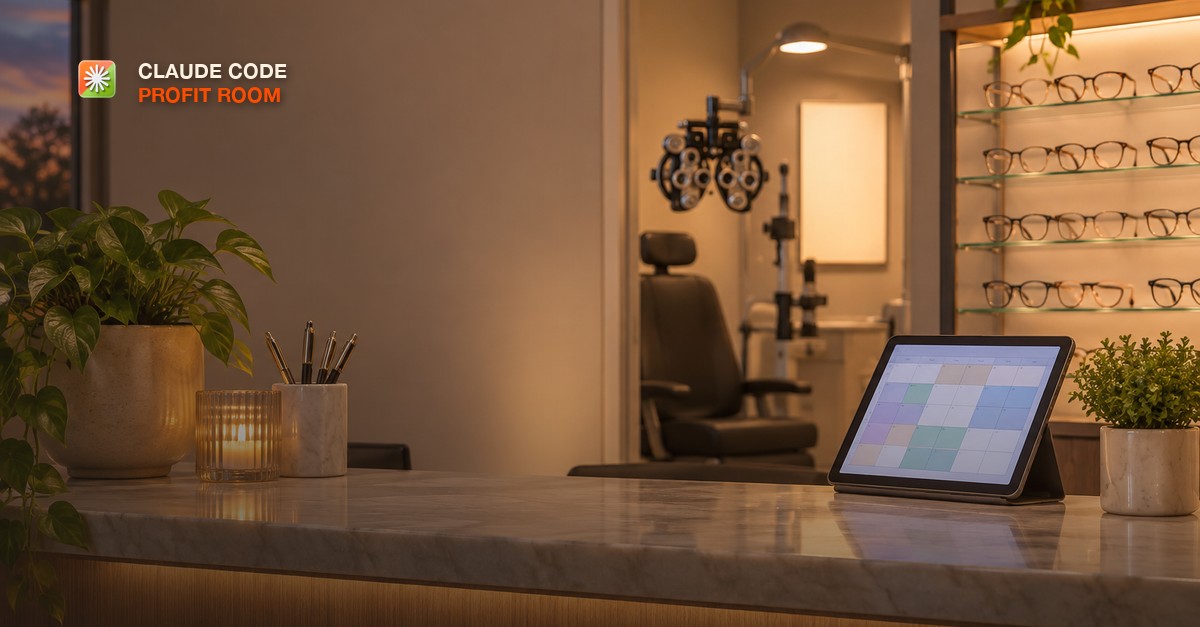
- An independent optometry practice lives on patients coming back every year or two for an exam, and on the glasses and contacts sold around that exam. Money leaks in three places: patients who are overdue and never get a real reminder, orders that arrive and sit in a drawer because nobody followed up, and calls the front desk misses while it is checking people in.
- The strongest first builds: an overdue-exam recall, an order-ready pickup follow-up, appointment confirmations with what to bring, a contact lens reorder reminder, and an after-hours booking request. The AI never gives medical or eye health advice, never reads or explains a prescription, never says whether an exam is needed, and never touches clinical notes. Anyone describing sudden vision changes is told to contact the practice or emergency care right away.
- Use the Profit Room's Recall Pitch: ask the owner how many patients are past due for their exam, how many finished orders are waiting to be picked up, and how many calls go to voicemail on a busy morning. Price the first build against the exams and orders it brings back, then attach a monthly plan.
The Short Answer
Sell to an optometrist by selling patients who come back, not marketing. Most independent practices already have a long list of past patients. The leak is that a big share of them drift past their yearly or two-year exam and nobody asks them back in a way that gets a reply. A patient's new glasses arrive, a voicemail goes out once, and the frames sit in a drawer for a month. A parent calls to book back-to-school exams at 8:45 while the front desk is checking in the first three patients, hits voicemail, and books somewhere else. In my view those leaks, the overdue patient, the uncollected order, and the missed call, are where an AI build pays for itself fastest.
That is the Recall Pitch: three questions - how many patients are past due for their exam, how many finished orders are waiting to be picked up, and how many calls went to voicemail last Monday morning? - followed by a demo of a recall message that books the exam in a couple of taps. If you have read the pitch for [dentists](/blog/sell-ai-builds-to-dentists) or [physical therapy clinics](/blog/sell-ai-builds-to-physical-therapy-clinics), the shape will feel familiar. The difference with optometry is the retail side: glasses and contacts are a real part of the business, so the build has two jobs, bringing patients back for exams and getting orders out the door.
What an Optometry Practice Actually Pays For
Independent practices earn from eye exams, contact lens fittings, and the glasses and contacts patients buy afterward. Almost all of it depends on patients coming back on schedule and the front desk keeping up. I would pitch the first build on one of these five.
- Overdue-exam recall: a friendly message to patients past their usual exam window, in the practice's voice, with a link to pick a time. Replies with questions go to the front desk. This is usually the biggest number on the table.
- Order-ready pickup follow-up: when glasses or contacts arrive, the patient gets a message with pickup hours, then a gentle second note if they have not come in. Fewer orders sitting in a drawer, fewer awkward calls weeks later.
- Appointment confirmations: a confirmation and reminder that says what to bring, such as current glasses, contact lens boxes, insurance card, and a list of medications, plus a note if the exam may include dilation so they can plan a ride if needed. The practice writes that note; the assistant just sends it.
- Contact lens reorder reminder: a reminder near the time a patient's supply usually runs out, with a simple way to reorder through the practice. Wording comes from the practice, and anything about the prescription itself goes to staff.
- After-hours booking request: evening and weekend messages get an instant reply that collects the patient's name, reason for the visit in their own words, and preferred times, so the front desk starts the morning with a clean list instead of a full voicemail box.
Notice what is not on the list: anything clinical. Patients ask 'is it normal that my eye has been red for three days?', 'what does this number on my prescription mean?', and 'do I really need an exam to get more contacts?' The first belongs to the doctor. The second belongs to the doctor or trained staff. The third depends on the patient's prescription and the practice's policy, and the assistant should hand it to a person instead of answering.
An optometry practice is a healthcare provider, so patient information is regulated (in the US, under health privacy rules like HIPAA). Scope the first build to administrative data, like a name, a phone number, and the date of the last exam, and keep diagnoses, prescriptions, and exam notes out of it. If a later build needs to touch that information, expect a business associate agreement to be part of the conversation. [Is it safe to use Claude Code with client data](/blog/is-it-safe-to-use-claude-code-with-client-data) covers how to handle that side of the build. You can build and test all of this in the Claude Code desktop app; the terminal is optional.
How to Pitch the Optometrist
Before you reach out, look at the practice from a patient's side. Read their public reviews and their website. Comments like 'could never get through on the phone' or 'my glasses were ready for weeks before anyone told me' tell you which part of this pitch will land. Call during a busy morning and try to book, then send a booking request through their website in the evening and notice what happens and how long it takes.
Then ask the three Recall questions. 'How many patients are past due for their exam?' Most practice management systems can pull that list, and the number is usually bigger than the owner expects. 'How many finished orders are waiting to be picked up right now?' 'How many calls went to voicemail last Monday morning?' Then [demo, do not describe](/blog/the-demo-first-close). Show a recall message going out to a test patient and the patient picking a time in two taps. Then send 'I just started seeing flashes and a dark curtain in my left eye' and show the assistant telling the patient to call the practice right away or go to emergency care, and alerting staff. That last message is what wins the doctor's trust. It shows the build knows where it stops.
[Qualify before you build](/blog/qualify-a-lead-before-the-call). Ask which practice management and scheduling software they use, whether it can export a list of patients and last exam dates, who handles optical orders, and who owns the decision. At an independent practice the owner-doctor usually signs, but the office manager feels the pain and will champion the build. A practice whose software can export a clean recall list is a fast build. A practice whose records live in an old system with no export is a different project, and getting that data out is its own scoped job.
How to Price the Build
Price against patients brought back, not your hours, which is the frame [value-based pricing](/blog/value-based-pricing-stop-charging-hourly) exists for. The owner knows roughly what an exam is worth and what the average patient spends on glasses or contacts afterward. Do the math out loud with their numbers: if the recall brings back a modest share of the overdue list, and the pickup follow-up clears orders faster, what is that worth over a year? If that covers the build in a few months, a scoped first build priced in the low thousands is easy to justify.
Then attach the monthly plan, because recall wording needs refreshing, seasonal pushes like back-to-school exams need new messages, staff change, and the follow-ups need tuning once you see which messages patients answer. Structure it the way [packaging a maintenance plan for AI builds](/blog/package-a-maintenance-plan-for-ai-builds) lays out, and report what the owner cares about: overdue patients rebooked, orders picked up, after-hours requests captured, and calls that no longer hit voicemail. If they hesitate, the overdue-exam recall alone is a fine first step. It works from a list the practice already has, and the owner will see booked exams within the first few weeks.
| Build | Leak it plugs | Where the AI must stop |
|---|---|---|
| Overdue-exam recall | Patients who drift past their exam window | Saying whether an exam is needed |
| Order-ready pickup follow-up | Finished orders sitting in a drawer | Explaining or changing a prescription |
| Appointment confirmations | No-shows and unprepared patients | Giving medical advice about the exam |
| Contact lens reorder reminder | Patients who reorder somewhere else | Answering prescription or expiry questions |
| After-hours booking request | Calls and messages nobody answers | Handling urgent eye symptoms instead of sending them to care |
Optometry builds, ranked by how fast they pay back
Short, practical drops on offers, outreach, pricing, and closing clients with Claude Code. No spam, unsubscribe anytime.
Frequently asked
What is the best first AI build to sell an optometrist?
Usually the overdue-exam recall. It works from a patient list the practice already has, it only needs administrative data like a name and last exam date, and the owner sees booked exams within the first few weeks.
Can an AI assistant answer patients' eye health questions?
No. It should never give medical or eye health advice, explain a prescription, or say whether an exam is needed. Those questions go to the doctor or trained staff, and anyone describing sudden vision changes or an eye injury is told to contact the practice right away or go to emergency care.
Do I need a HIPAA agreement to build for an optometry practice?
You need a business associate agreement whenever your build stores, processes, or sends protected health information for the practice. Scoping the first build to administrative data, like a name, phone number, and appointment time, keeps it simpler. Anything touching prescriptions, diagnoses, or exam notes brings that agreement into the conversation.
What should the assistant do when a patient asks for a copy of their prescription?
Pass the request to staff right away and never refuse it. Patients are entitled to their prescription, and the practice should handle the request directly.
How much should I charge an optometry practice for an AI build?
Price against the exams and orders it brings back, using the owner's numbers, not your hours. A scoped first build priced in the low thousands is usually easy to justify, followed by a monthly plan to keep recall messages, seasonal pushes, and follow-ups current.
Last reviewed November 15, 2026.

Co-founder of the Claude Code Profit Room. Went from shipping software to closing paying clients, and now teaches builders the selling half of the equation.
More from David Iya →