How to Deliver a Build So Clients Come Back
- Most builders lose repeat work at the handoff, not in the code. A clean delivery is what makes a client come back.
- Deliver a build with a walkthrough, a plain-English runbook, and a clear line for what happens next - not a zip file and silence.
- The last impression sets up the next project. Package the ending as an opening.
How to Deliver a Claude Code Build So Clients Come Back
To deliver a Claude Code build so clients come back, hand off a Delivery Packet - a plain-English recap, a runbook, and an access map - run a recorded 30-minute walkthrough on the client's real workflow, leave the build clean enough that anyone can maintain it, and close with a short menu of next improvements. The code is what they paid for; the handoff is what they remember. A handoff that feels safe and finished is what turns one project into repeat work and referrals.
A client rarely rehires you because the code was elegant. They rehire you because handing off the work felt safe, clear, and finished. The build is the thing they paid for; the handoff is the thing they remember. Get it wrong and even a technically perfect project ends with a confused client who never opens what you made and quietly moves on.
When you deliver a Claude Code build the right way, the ending of one project becomes the start of the next. That is the whole game for a builder who wants steady income instead of a treadmill of new leads. A repeat client costs nothing to win, trusts you already, and hands you bigger work. The handoff is where you earn that, so treat the last week of a build with the same care you gave the first.
The Delivery Packet: What a Clean Handoff Contains
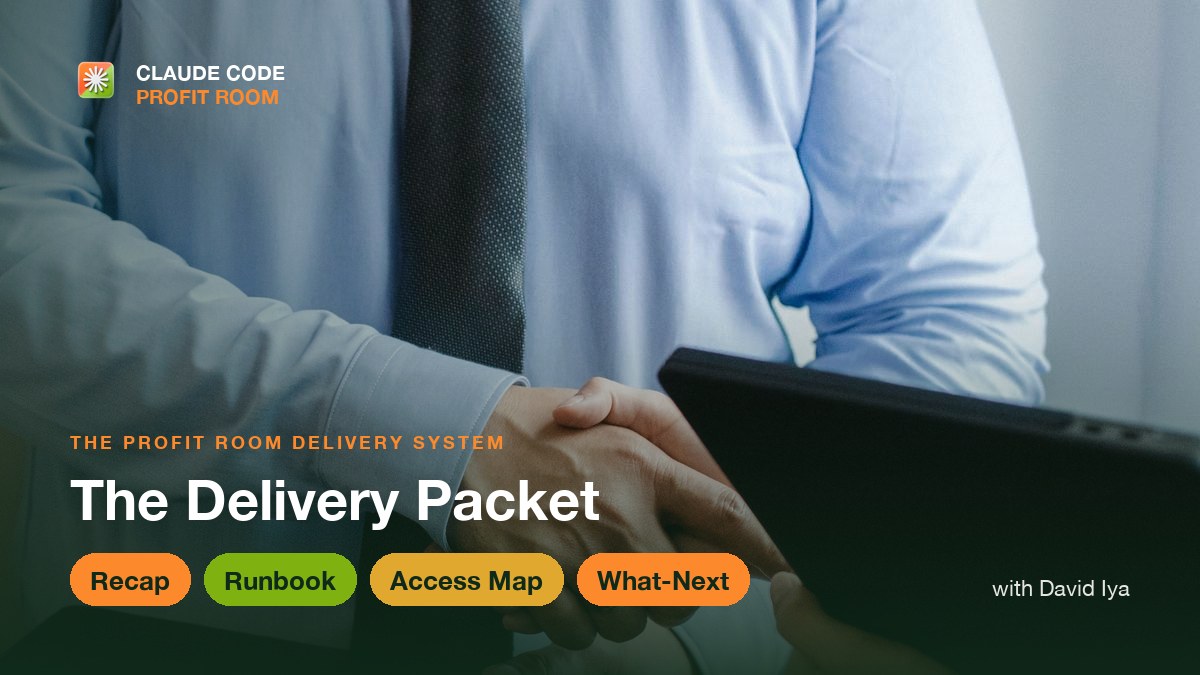
Do not end a build by dropping a link and saying 'all done.' Build one Delivery Packet the client can open, understand, and act on without you in the room. It is the single artifact that separates a builder who gets rehired from one who gets ghosted.
| Piece | What it is | Why it earns the next project |
|---|---|---|
| The recap | What you built, mapped to the outcome they wanted | Reminds them why the money was worth it |
| The runbook | Plain-English steps to use and maintain it | They actually use the build instead of shelving it |
| The access map | Where everything lives and how to get in | They never feel locked out or dependent by accident |
| The what-next | The obvious next improvements you spotted | Plants the seed for the follow-on engagement |
What goes in the Delivery Packet
Run a Live Walkthrough, Not a Silent Drop
The most valuable thirty minutes of any project is the walkthrough call at the end. You screen-share, you drive the build through the exact workflow the client cares about, and you watch their face. This is where you turn a folder of files into something they feel ownership of. A client who has seen the build work, with their own data, in front of their own eyes, is a client who believes it was worth the money.
Record the walkthrough and send it with the Delivery Packet. Now the client can rewatch it, forward it to a teammate, and onboard the next person without pulling you back in for free. Counterintuitively, making yourself less needed for support is exactly what makes a client comfortable hiring you again - they know the last build did not turn into an endless leash.
Leave the Build Better Than You Found It
A build that works today but breaks the moment the client changes one thing is a build that ends the relationship. Spend the last stretch of the project making the work durable, not just functional. Small acts of care here are what a client remembers when they decide who to call for the next thing.
- Name things clearly, so a future you or another builder can read the project cold.
- Leave short notes where the logic is not obvious, not a wall of comments nobody reads.
- Remove the dead ends, test files, and half-tried approaches that clutter the final handoff.
- Confirm the build survives the obvious edge case the client will hit in week one.
- Hand over credentials and keys through safe channels, and rotate anything that touched a chat window.
Package the Ending as an Opening
The last message of a project should not be an invoice. It should be a short, honest note about what you would build next if it were your business. During the build you will have spotted three or four obvious improvements you had to leave out of scope. Write them down as you go, and present them at handoff as a simple menu, not a hard sell.
This does two things at once. It shows the client you were thinking about their business, not just closing a ticket, and it gives them an easy yes for the next engagement while you are still fresh in their mind and their trust is at its peak. Most repeat work is lost simply because the builder never mentioned it existed.
How to Deliver a Claude Code Build, Step by Step
Turn delivery into a routine you run at the end of every project, so a clean handoff is automatic rather than something you improvise while tired. The goal is a client who feels the build was finished, safe, and worth every dollar - and who already knows what they want to hire you for next.
- Assemble the Delivery Packet: recap, runbook, access map, and a short what-next list.
- Run a 30-minute live walkthrough on the client's real workflow, and record it.
- Clean the build so it survives the obvious edge case and anyone can maintain it.
- Hand over all access safely, rotating any credential that touched an insecure channel.
- Close with a short menu of next improvements, so the ending becomes the next opening.
Short, practical drops on offers, outreach, pricing, and closing clients with Claude Code. No spam, unsubscribe anytime.
Frequently asked
What should I include when I deliver a build to a client?
A Delivery Packet with four parts: a recap tying the build to the outcome they wanted, a plain-English runbook for using and maintaining it, an access map showing where everything lives, and a short list of obvious next improvements. Pair that with a recorded live walkthrough so the client can see the build work on their own data and onboard teammates without pulling you back in for free.
How do I get a client to rehire me after a project?
Make the handoff feel safe and finished, then plant the next project before you leave. During the build, note the improvements you had to leave out of scope, and present them at delivery as a simple menu. Most repeat work is lost not because the client was unhappy, but because the builder never mentioned what could come next while trust was at its peak.
Should I keep supporting a build for free after handoff?
Give the client the tools to be independent - a clear runbook and a recorded walkthrough - so routine questions do not become unpaid support. That independence is what makes clients comfortable rehiring you, because they know the last build did not turn into an endless leash. For anything beyond quick questions, scope it as a paid maintenance or improvement engagement.
What is the biggest mistake builders make at delivery?
Ending with a silent drop - a zip file or a link and 'all done.' A build the client cannot understand, use, or maintain gets shelved, and a shelved build never becomes a repeat client. The fix is a live walkthrough plus a Delivery Packet written for the least technical person on their team, so the work feels owned by the client rather than trapped with you.
Last reviewed July 18, 2026.

Co-founder of the Claude Code Profit Room. Went from shipping software to closing paying clients, and now teaches builders the selling half of the equation.
More from David Iya →