How to Sell AI Builds to Cleaning Companies (The Recurring-Client Pitch)
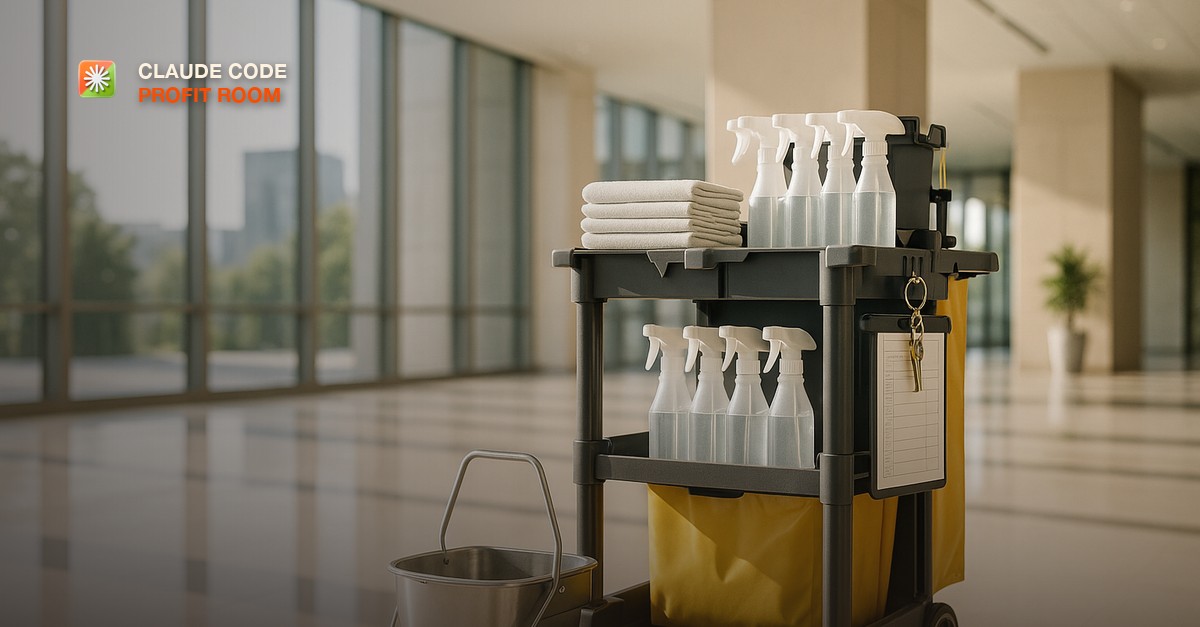
- Cleaning companies win or lose on retention. A residential client on a weekly or biweekly schedule is worth dozens of visits a year, and most of them leave silently after a reschedule that never got rebooked or a bad clean nobody asked about. The owner is on a job site, so the phone and inbox where those moments happen are unattended.
- The strongest first builds: an instant quote-and-book assistant that collects the details an estimator would ask and books the walkthrough or first clean; a schedule-change assistant that handles reschedules, cancellations, and reminders and refills the gap; and a post-clean check-in that catches a complaint before it becomes a review and asks happy clients for one.
- Use the Profit Room's Recurring-Client Pitch: ask the owner how many recurring clients they lost last quarter and whether they know why each one left. Price the first build against what one kept client is worth over a year, not against your hours, and attach a monthly plan because the schedule changes every single week.
The Short Answer
Sell to a cleaning company by selling the client they keep. Unlike a plumber or a roofer, a cleaning company does not make its money on one emergency; it makes it on the same customer coming back every week or two for years. That means the expensive moment is not the missed new lead, although that hurts too. It is the existing client who texted to skip this Thursday, never got offered a new slot, and drifted to a competitor. Nobody noticed, because the owner was pushing a cart through an office building at the time.
That is the Recurring-Client Pitch: one question - how many recurring clients did you lose last quarter, and do you know why each one left? - followed by a demo of an assistant that handles the reschedule, offers the next open slot, confirms the crew, and checks in after the clean. Do not open with AI or automation. Open with the churn the owner feels but has never measured, and be the person who plugs it. The entry logic is close to [selling AI builds to salons and barbershops](/blog/sell-ai-builds-to-salons-and-barbershops): appointment-based, relationship-driven, owner on the floor.
What a Cleaning Company Actually Pays For
A cleaning business, residential or commercial, bleeds at four points: the quote request that needs a callback, the schedule change that never gets rebooked, the crew gap that leaves a slot empty or a client stood up, and the quality complaint that turns into a public review instead of a private fix. Every first build worth pitching sits on one of those.
- Instant quote and booking: an assistant that answers the website form, text, or call the moment it arrives, asks what an estimator would - square footage or bedrooms and bathrooms, frequency, pets, add-ons like inside the oven or windows, move-out or recurring - and returns an estimate range or books the walkthrough. Residential buyers shop three or four companies and go with the first one that gives them a number.
- Schedule changes and reminders: reschedules, cancellations, and skip-this-week requests handled in the owner's voice, with the next open slot offered immediately so the client stays on the calendar. Reminders the day before cut the locked-door no-show that costs a crew a whole morning. When a slot opens, the assistant offers it to a waitlist so the gap gets filled instead of eaten.
- Post-clean quality check-in and reviews: a short message after every visit asking how it went. A bad answer alerts the owner before the client goes online; a good answer becomes a review request. For a business that lives on local search and referrals, this single loop is worth more than any ad.
- Commercial account follow-up: janitorial bids go quiet after the walkthrough, and contracts roll toward renewal with no one paying attention. A follow-up sequence on open proposals and a renewal reminder ahead of every contract date recovers revenue the owner already earned the walkthrough for.
All of it is front-office. None of it touches payroll, chemicals, or anything regulated, and every line maps to a client kept or a slot filled. Most cleaning companies already run some scheduling or field software, so your build wraps around it: catch what it drops, write into the calendar they already use, and replace nothing. If you want the scoping questions in a repeatable form, [an AI intake form](/blog/how-to-build-an-ai-intake-form-for-clients) is the first thing you build for them.
How to Pitch the Owner
Go to the owner. Most cleaning companies are owner-operated or owner-dispatched, and the person who signs is the one moving crews around by text all day. Respect that: a short text that earns a ten-minute call beats a cold email, and early morning before crews roll or late afternoon after the last job is when they can actually talk. Get to the sting fast. 'How many recurring clients did you lose last quarter?' Most owners will not know, and that pause is your opening.
Then demo, do not describe. Text your demo line as if you were a client cancelling Thursday, and let the owner watch it apologize, offer Friday morning, confirm, and send a reminder. Then send it a 'the bathroom was not done' message and let them watch it escalate to the owner privately. In a business built on trust in someone's home, the owner needs to see that the assistant sounds like them, not like software.
[Qualify before you build](/blog/qualify-a-lead-before-the-call). A two-person residential outfit, a company with six crews and a commercial book, and a franchise location are three different businesses. Ask how work comes in, what they schedule with, how reschedules are handled today, and how many active recurring clients they have. That last number sets the value of every build you propose, and the reschedule answer usually tells you which build comes first.
How to Price the Build
Price against a kept client, not against your hours - the frame [value-based pricing](/blog/value-based-pricing-stop-charging-hourly) exists for. The owner knows what an average clean bills and how often a recurring client comes. Do the math out loud with their numbers: one biweekly client times visits per year is a real figure, and if the schedule assistant keeps even a handful of those from drifting away, the build has paid for itself before you talk about new leads at all. Against that, a scoped first build priced in the low thousands is cheaper than the churn they are already absorbing. Scope it to the single worst leak, which is usually the reschedule-and-refill assistant, and ship it in days.
Then attach the monthly plan, because cleaning is a natural retainer vertical. Schedules change every week, crews turn over, seasonal demand swings around holidays and move-out season, prices and service areas shift, and the quality check-in runs on every single visit. Structure it the way [packaging a maintenance plan for AI builds](/blog/package-a-maintenance-plan-for-ai-builds) lays out and lead with what the owner sees each month: fewer gaps, more reviews, fewer surprises. If they hesitate on the build, a small paid look at where their recurring clients actually leave is a clean [audit offer](/blog/the-audit-offer-foot-in-the-door) that names the leak with their own numbers before you propose the fix.
Short, practical drops on offers, outreach, pricing, and closing clients with Claude Code. No spam, unsubscribe anytime.
Frequently asked
What is the best first AI build to sell a cleaning company?
A schedule-change assistant: it handles reschedules, cancellations, and skip requests in the owner's voice, offers the next open slot immediately so the client stays on the calendar, sends day-before reminders, and offers freed slots to a waitlist. Cleaning companies make their money on recurring visits, so keeping an existing client booked is worth more than almost any new lead. An instant quote-and-book assistant and a post-clean check-in with review requests are the natural second and third builds.
Do cleaning companies have budget for AI builds?
For a scoped build, yes, when it is anchored to their own numbers. A recurring residential client is worth many visits a year, commercial janitorial contracts are worth far more, and owners already pay monthly for scheduling and lead software. Walk through what an average clean bills, how often recurring clients come, and how many quietly left last quarter. Priced against that churn, a first build in the low thousands plus a monthly plan reads as a rational trade rather than a software expense.
Who do I pitch at a cleaning company?
The owner, in almost every case. Most cleaning companies are owner-run, and the owner is usually the dispatcher too, moving crews by text all day. Keep it to one sharp question about lost recurring clients, then a live demo they can watch on their phone. Short texts that earn a ten-minute call work better than email, and the best windows are early morning before crews roll or late afternoon after the last job. At larger companies an office manager may run the schedule and can champion you, but the owner still signs.
Should my build replace the cleaning company's scheduling software?
No. Established cleaning companies usually run scheduling or field-service software they rely on for crews and invoicing, and a migration turns a quick yes into a long maybe. The winning first build wraps around the existing stack: it catches the texts, calls, and form fills the current setup misses, writes bookings and changes into the calendar they already use, and runs the check-ins and follow-ups nobody has time to send. You are selling kept clients and filled slots on top of their tools.
How do I price an AI build for a cleaning company?
Do the math with the owner's numbers: what an average clean bills, times visits per year for a recurring client, times the number of clients the schedule assistant keeps from drifting away. Price the scoped first build against that retained revenue, commonly in the low thousands, then attach a monthly plan covering the assistant, the reminder and refill logic, seasonal changes, and the quality check-in on every visit. The retainer is where this vertical pays, because the schedule changes every week and the owner has no interest in maintaining software between jobs.
Last reviewed September 25, 2026.

Co-founder of the Claude Code Profit Room. Built and sold AI services to real clients; writes about offers, pricing, outreach, and closing with receipts.
More from Duncan Rogoff →